
Table of Contents
Introduction
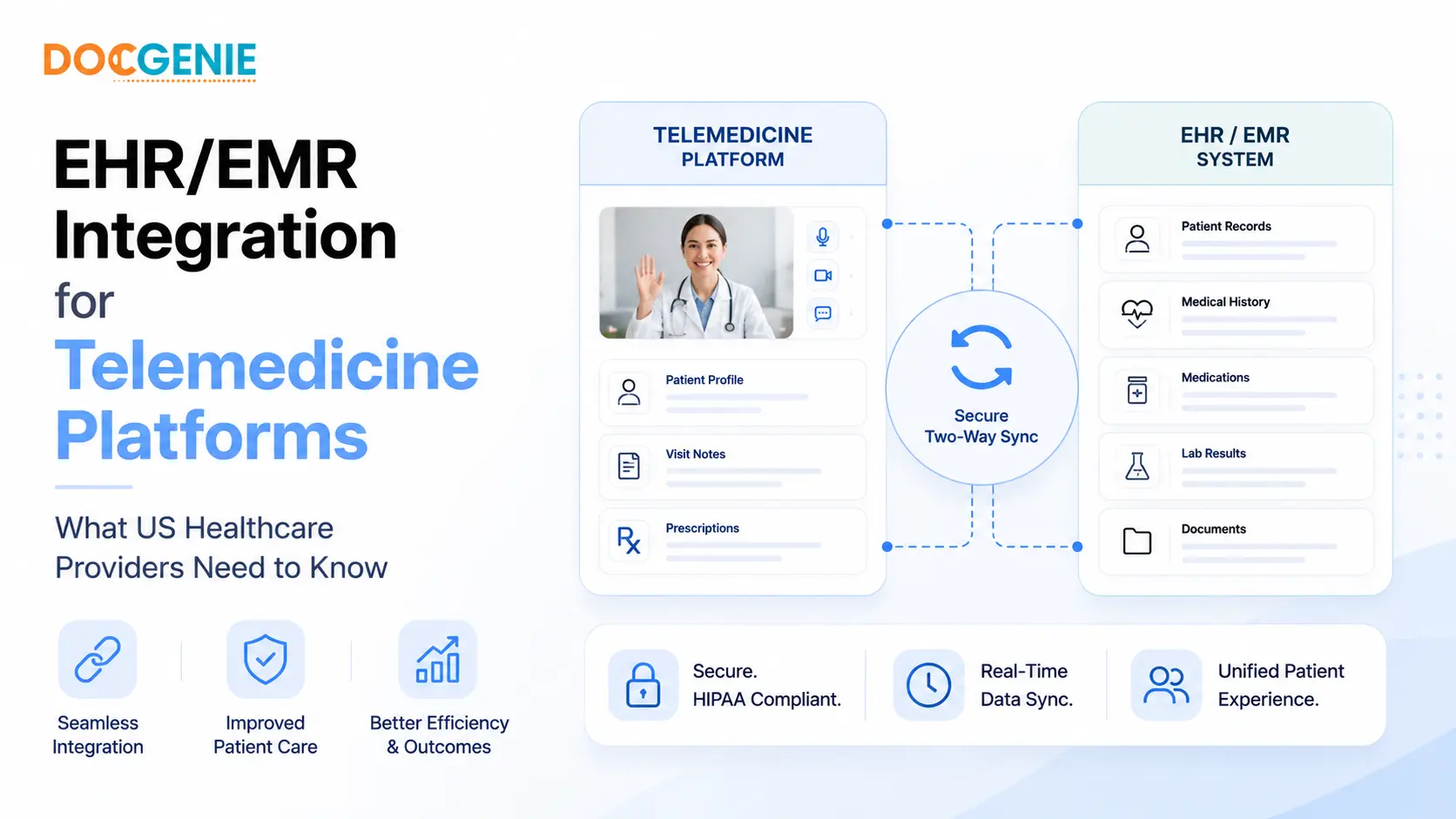
EHR and EMR integration is one of the most common — and most misunderstood — questions US healthcare providers ask when evaluating telemedicine platforms. Here is a practical guide to what integration actually means, what it enables, and how to evaluate whether a vendor can support your specific system.
EHR vs. EMR: A Quick Clarification
EMR (Electronic Medical Record) systems are digital versions of a patient chart, typically used within a single practice. EHR (Electronic Health Record) systems are designed to share information across multiple providers and care settings. In practice, many organisations use the terms interchangeably — what matters for telemedicine is how your existing system stores and shares patient data, and what APIs or integration methods it exposes.
What EHR/EMR Integration Enables in Telemedicine
When your telemedicine platform is connected to your EHR or EMR system, it can:
What Integration Actually Looks Like
Most modern EHR and EMR systems expose APIs (Application Programming Interfaces) that allow external platforms to read and write data in structured formats. HL7 FHIR (Fast Healthcare Interoperability Resources) is the current standard for health data exchange in the US, supported by major systems including Epic, Cerner, athenahealth, and Allscripts.
Integration depth varies:
What to Ask Your Telemedicine Vendor About EHR/EMR Integration
Common EHR/EMR Integration Pitfalls to Avoid
Several integration mistakes add cost and delay to telemedicine deployments:
Conclusion
EHR and EMR integration is what turns a telemedicine platform from a standalone video tool into a genuine extension of your clinical workflow. The providers who get the most value from white label telemedicine are those who define their integration requirements clearly upfront, ask the right questions of their vendor, and plan for ongoing maintenance — not just the initial go-live.