
Table of Contents
Introduction
HIPAA compliance is not a feature. It is a legal obligation that applies to every US healthcare provider who handles electronic protected health information (ePHI) — and telemedicine generates ePHI at every step of the patient journey. Understanding what HIPAA actually requires for virtual care helps healthcare organisations ask the right questions when evaluating telemedicine platforms.
The Three HIPAA Rules That Apply to Telemedicine
The Privacy Rule governs how patient health information can be used and disclosed. In telemedicine, this means patient records, consultation notes, and appointment history must be handled with defined access controls and disclosed only for permitted purposes.
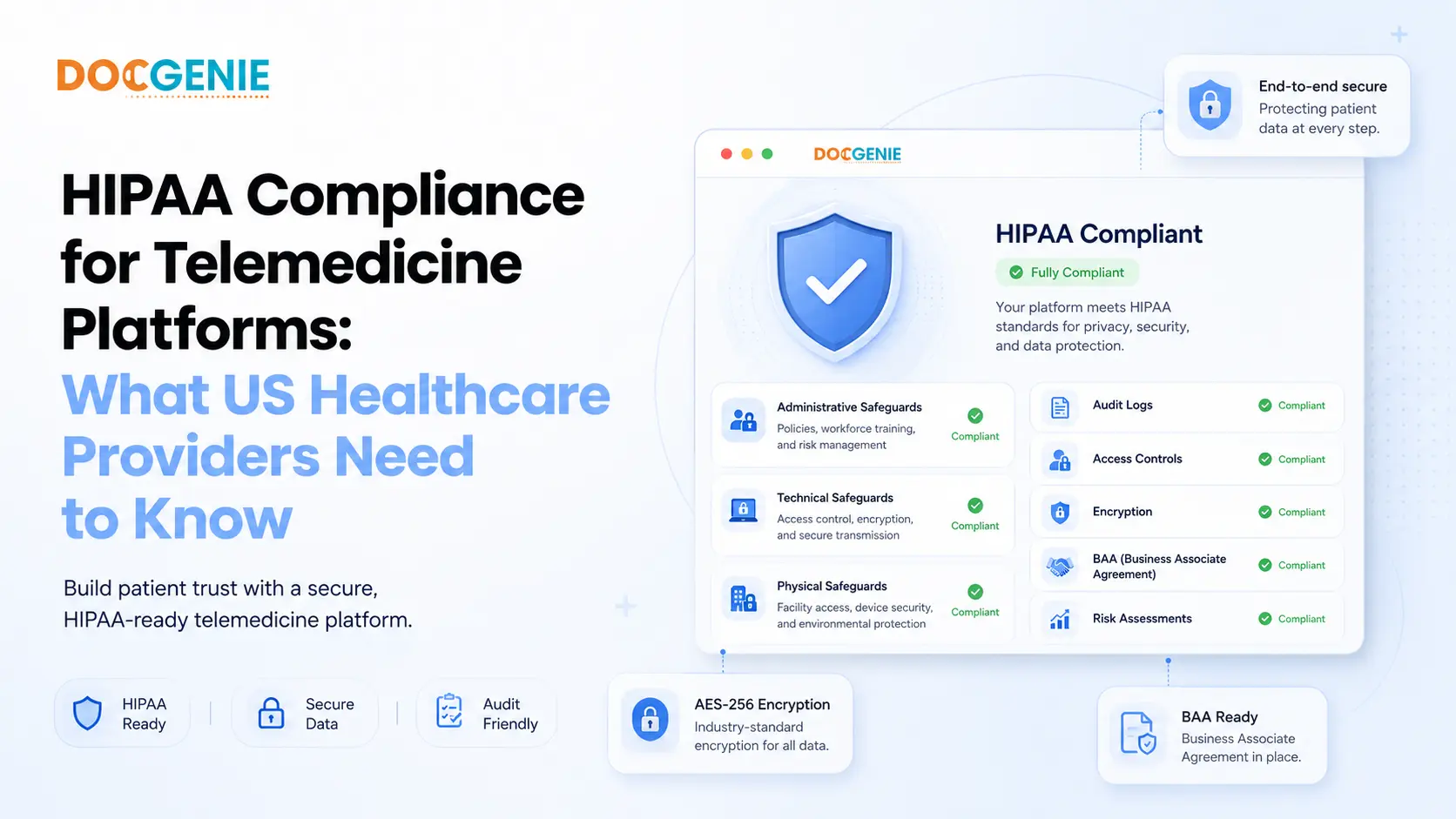
The Security Rule sets technical and administrative standards for protecting ePHI in electronic form. For a telemedicine platform, this covers encrypted data transmission, secure video infrastructure, user authentication, audit logging, and breach notification procedures.
The Breach Notification Rule requires covered entities to notify patients and the Department of Health and Human Services if unsecured ePHI is accessed or disclosed without authorisation.
Business Associate Agreements (BAAs)
Any technology vendor who handles ePHI on behalf of a covered entity — including your telemedicine platform provider — is legally classified as a Business Associate. Before going live with a telemedicine platform, a signed Business Associate Agreement (BAA) between your organisation and the vendor is required under HIPAA. A BAA defines how the vendor will protect ePHI, what they will do in the event of a breach, and how they will support your compliance obligations.
What to Look for in a Telemedicine Platform from a HIPAA Perspective
When evaluating any white label telemedicine platform for US use, these are the key questions to ask:
HIPAA-Aligned vs. HIPAA-Certified: Understanding the Difference
No government body issues 'HIPAA certification.' Vendors who claim to be 'HIPAA certified' are typically referring to third-party audits or assessments against HIPAA standards — not a formal government certification. What matters is whether the platform's architecture, data handling practices, and contractual commitments support your organisation's compliance obligations under HIPAA.
Key Technical Safeguards for Telemedicine
The HIPAA Security Rule requires specific technical safeguards for systems handling ePHI. For telemedicine platforms, the most relevant include:
When evaluating a telemedicine vendor, ask specifically how their platform addresses each of these requirements.
DocGenie Global and HIPAA Alignment
DocGenie Global is designed to support HIPAA-aligned virtual care workflows for US healthcare providers, with privacy-focused architecture, role-based access controls, secure data handling, and BAA availability. Final HIPAA compliance depends on your organisation's implementation, processes, and configuration — as it does with any platform.
Conclusion
HIPAA compliance in telemedicine is a shared responsibility between your organisation and your technology vendor. The right white label telemedicine partner understands their obligations as a Business Associate, provides transparent documentation of their security practices, and signs a BAA before any patient data flows through their systems. Evaluating vendors through this lens — not just their feature list — is how US healthcare providers protect their patients and their organisations.
Related Articles

7 Benefits of Integrating a White-Label Telemedicine Solution for Clinics and Hospitals

Here's How You Can Effectively Train Your Clinic's Staff to Deliver High Quality Virtual Care