Table of Contents
Introduction
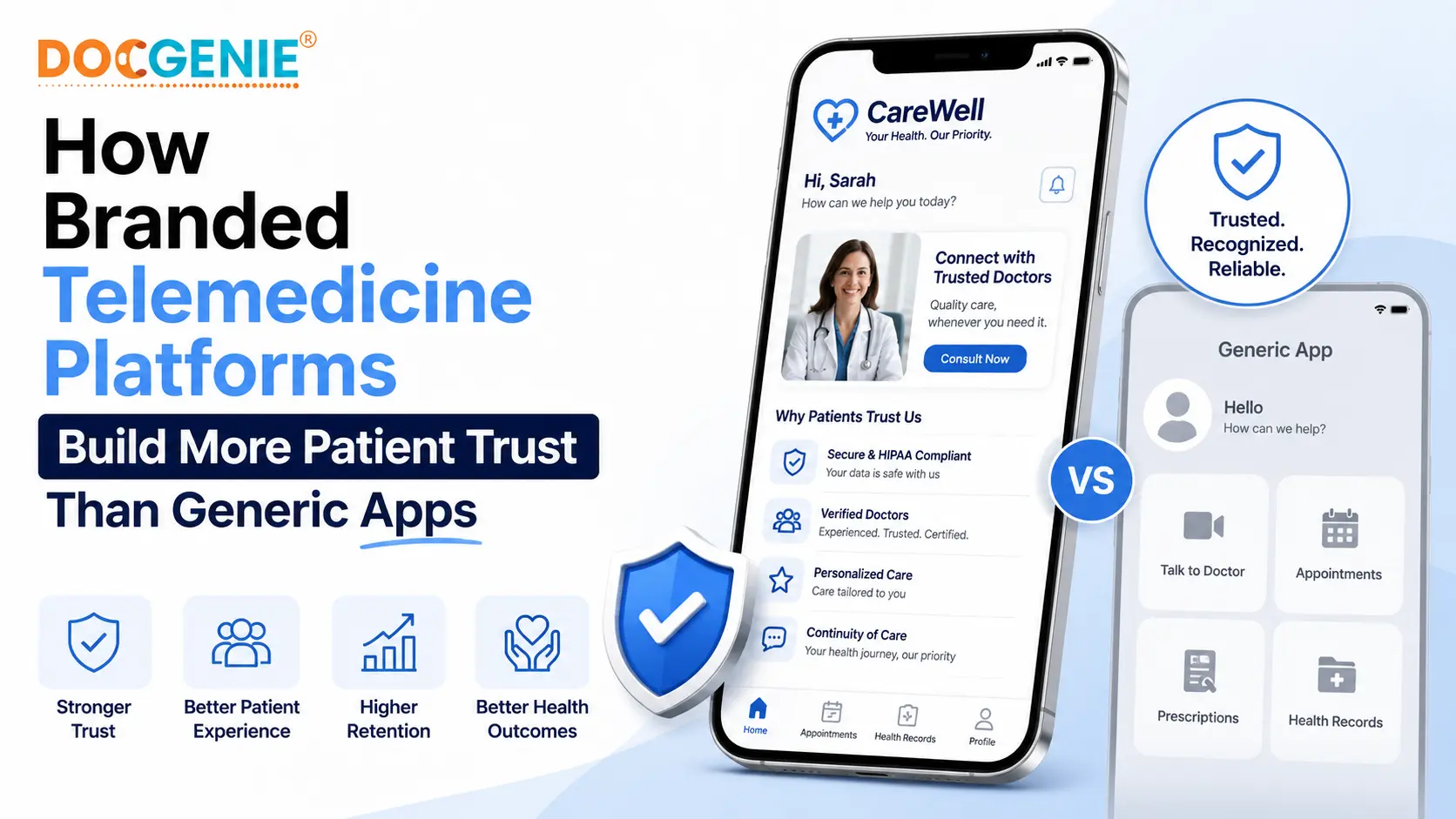
When healthcare providers evaluate telemedicine platforms, they typically compare features: video quality, scheduling tools, EHR connectivity, mobile experience. Branding is often treated as a nice-to-have — something to address after the technology is sorted. The evidence suggests this gets the priority backwards.
The Trust Gap in Generic Telehealth
When a patient books a virtual consultation through your practice and lands on a page that says 'Powered by [Third-Party Platform]' — or worse, redirects them to a different domain entirely — something important breaks. The patient is no longer in your care environment. They are in someone else's. For routine digital services, this friction is minor. In healthcare, where trust is the foundation of the patient-provider relationship, it matters more.
What Patients Experience With Generic Platforms
Patients who encounter an unfamiliar third-party platform during their care journey are more likely to:
None of these outcomes serve the patient or the provider. They represent friction that branded telemedicine eliminates.
What White Labeling Actually Changes
A white label telemedicine platform means patients never leave your brand's environment. From the moment they receive a booking confirmation email to the moment they join the video consultation and receive their follow-up message, every touchpoint carries your logo, your name, and your domain. This is not purely cosmetic. It changes the patient's psychological frame from 'I'm using a telehealth app' to 'I'm seeing my doctor.' That distinction affects engagement, compliance with care plans, and satisfaction scores.
Brand Continuity as a Clinical Advantage
The clinical implication of brand continuity is underappreciated. Patients who feel consistently connected to their provider's brand — across in-person, virtual, and follow-up touchpoints — are more likely to:
Each of these outcomes has a measurable impact on both patient health and practice revenue.
The Feature Question Revisited
Strong features matter — secure video, reliable scheduling, EHR connectivity. But these are table stakes. Multiple vendors offer them. What differentiates the patient experience, and what drives adoption and retention, is whether patients feel they are within their trusted provider's environment or navigating an unfamiliar third-party platform. For US healthcare providers who have spent years building patient relationships and brand trust, a white label platform protects and extends that investment into virtual care.
What a Fully Branded Telemedicine Experience Includes
A complete white label telemedicine experience covers more than the consultation interface:
Conclusion
Telemedicine branding is not a cosmetic decision — it is a patient experience decision with measurable downstream effects on adoption, retention, and satisfaction. The providers who treat branded telemedicine as a trust-building tool, rather than a technology purchase, are the ones who see the strongest patient engagement with their virtual care programmes.
Related Articles
White Label Telemedicine for Mental Health Practices: A Complete Guide