Table of Contents
Introduction
Mental health care is one of the fastest-growing segments of virtual care in the US. Patients increasingly expect to access therapy, psychiatry, and counselling remotely — and providers who offer a seamless, branded digital experience are better positioned to meet that demand. For mental health practices, the choice of telemedicine platform involves considerations that differ from general or specialty care.
Why Mental Health Virtual Care Has Unique Requirements
Mental health consultations are sensitive by nature. Patients are more likely to engage consistently when they feel the platform is secure, private, and clearly associated with their trusted provider — not a generic third-party app they have never heard of.
For the practice, considerations include:
What White Labeling Means for a Mental Health Practice
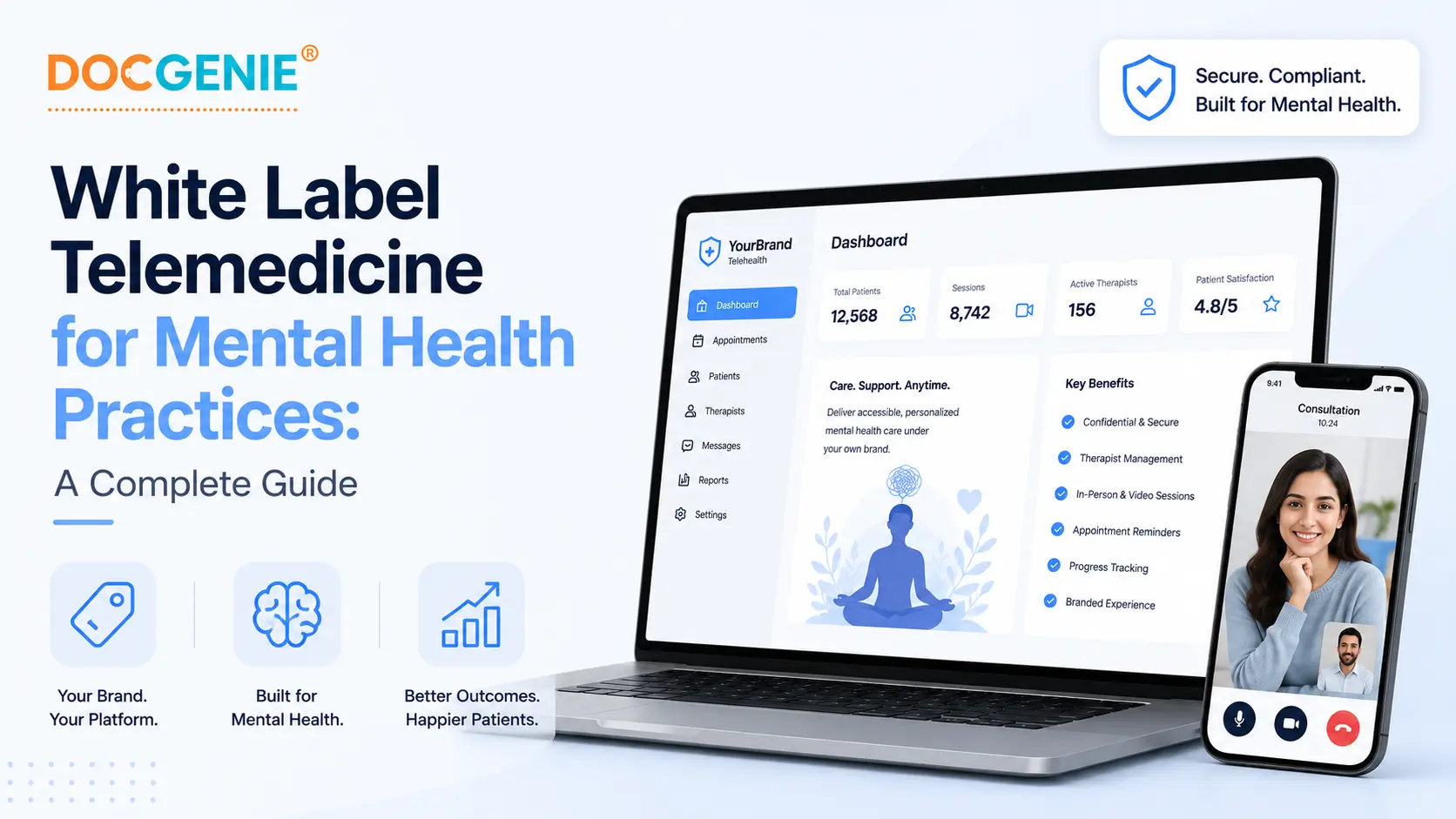
A white label telemedicine platform lets a mental health practice or behavioural health organisation offer virtual care entirely under their own brand. Patients see your practice name, your logo, and your domain — not a third-party platform. This matters in mental health more than most specialties, because the therapeutic relationship is built on trust and consistency of brand reassures patients they are within their provider's care environment.
Core Platform Capabilities for Mental Health Virtual Care
When evaluating a white label platform for mental health use, look for:
Group Practices and Multi-Provider Organisations
White label platforms that support multiple providers are particularly valuable for group mental health practices and community behavioural health organisations. Each provider can have their own scheduling and patient panel while operating under a single branded platform — giving patients a consistent experience regardless of which clinician they see.
Supporting the Recurring Care Model
Unlike acute or episodic care, mental health virtual care is typically recurring — patients return week after week, month after month. A white label platform that supports easy rebooking, automated reminders, and branded follow-up communication reduces the administrative friction that causes patients to drop out of care. When every touchpoint — booking confirmation, session reminder, post-session message — carries your practice name, patients stay engaged with your care environment rather than treating each virtual session as a standalone transaction.
Conclusion
For mental health practices and behavioural health organisations considering virtual care expansion, the right telemedicine platform is one that strengthens — rather than disrupts — the therapeutic relationship. A white label platform that keeps your brand front and centre across every patient interaction is the most direct way to deliver that continuity. DocGenie Global's white label telemedicine platform supports secure virtual consultation workflows, patient booking, provider dashboards, and branded patient communication for mental health and behavioural health providers.
Related Articles
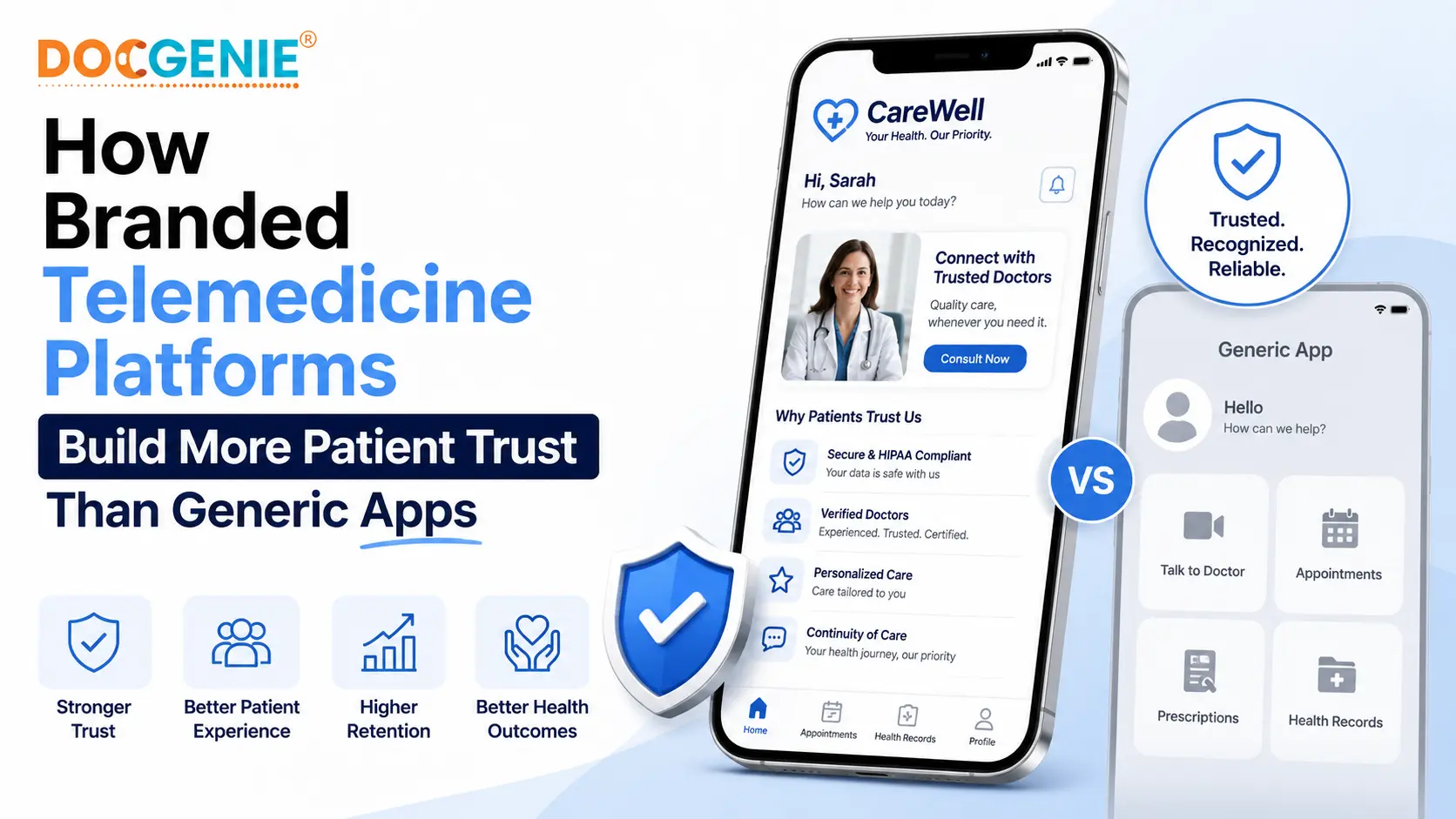
Why Your Telemedicine Platform's Branding Matters More Than Its Features