

Table of Contents
Introduction
Virtual care platforms are changing how clinics reach patients, manage appointments, and grow revenue. For healthcare providers looking to expand their services, a well-implemented virtual care platform can unlock patient populations and revenue streams that in-person-only operations simply cannot access.
1. Expand Your Reach Beyond Your Local Geography
A physical clinic is bounded by how far patients are realistically willing to travel. A virtual care platform removes that ceiling. Clinics can offer consultations to patients in surrounding towns, different parts of the same city, or entirely different regions — particularly valuable for specialist services where local access is limited.
This geographic expansion matters most for follow-up care, chronic condition management, mental health support, and specialist second opinions. Patients who would previously have gone without care — or sought it elsewhere — become accessible once the distance barrier is removed.
2. Improve Patient Access and Reduce Friction
Convenience is now a care quality metric. Patients who can book appointments online, consult from home, receive prescriptions electronically, and manage follow-ups without taking time off work are more likely to attend, complete care plans, and return for future visits.
The reduction in friction at each step — no travel, no waiting room, no last-minute rescheduling — directly affects appointment completion rates, patient satisfaction, and the likelihood of rebooking. For clinics, this means fewer missed appointments and a more predictable schedule.
3. Strengthen Patient Engagement Between Visits
A virtual care platform is not just a tool for conducting consultations — it is a platform for the ongoing patient relationship. Secure messaging, automated appointment reminders, prescription refill notifications, and post-consultation follow-up instructions keep patients connected to the clinic between visits.
This continuous engagement is especially valuable for chronic care management, preventive health programmes, and long-term condition monitoring. Patients who feel supported between visits are more likely to adhere to treatment plans and return when they need care. Learn more about how chronic care management workflows benefit from virtual care integration.
4. Streamline Operations Without Proportional Headcount Growth
Many administrative tasks that consume staff time can be automated through a well-configured virtual care platform: online appointment booking, payment collection, reminder messages, patient intake forms, and post-visit instructions. This reduces the manual coordination burden on reception and admin teams.
For clinics experiencing capacity pressure, this efficiency means the existing team can support more patients without an equivalent increase in headcount. Operational cost savings compound over time as manual workflows are replaced by structured digital processes.
5. Create New and Recurring Revenue Streams
Virtual care creates revenue opportunities that in-person-only clinics cannot easily replicate. Clinics can offer subscription-based chronic care programmes, remote monitoring packages, mental health support plans, and corporate health services — all delivered digitally under their own brand.
For practices already using a comprehensive virtual care platform, these recurring care models become operationally straightforward to manage. Follow-up visits, prescription renewals, and monitoring check-ins that might previously have been skipped become easy for patients to complete — reducing revenue leakage from appointment attrition.
6. Choosing a Platform Built for Growth
Not all virtual care tools are equal. A consumer video calling app is not a clinical platform. For a virtual care setup to genuinely support clinic growth, it needs to manage the full patient journey: registration, scheduling, consultation, clinical documentation, e-prescriptions, payments, follow-ups, and reporting.
Clinics that want to scale should evaluate platforms on how well they support these workflows, whether they can be branded as the clinic's own service, and whether they integrate with existing EHR and billing systems. A white-label telemedicine platform allows clinics to deliver all of this under their own identity, building patient trust and loyalty with every interaction.
Conclusion
Virtual care platforms give clinics a practical path to growing patient volume, improving operational efficiency, and building recurring revenue — without requiring proportional investment in physical infrastructure. The clinics that treat virtual care as a strategic capability rather than a temporary addition will be better positioned to compete as patient expectations for digital access continue to rise.
Frequently Asked Questions
How can a virtual care platform help my clinic reach more patients?
A virtual care platform removes geographical limitations so your clinic can offer consultations to patients outside your immediate area. This is especially valuable for rural or underserved populations, follow-up visits, chronic care check-ins, and patients who cannot travel easily.
What features should a virtual care platform have to support clinic growth?
A growth-focused virtual care platform should include online appointment booking, secure video consultations, integrated patient records, e-prescriptions, automated reminders, payment processing, and an admin dashboard for tracking performance and capacity.
Can a small clinic afford and benefit from a virtual care platform?
Yes. White-label and ready-made virtual care platforms make it possible for small clinics to launch quickly without a large technology investment. The reduction in no-shows, increased follow-up completion, and access to new patient populations can generate a positive return even for smaller practices.
How does telemedicine help clinics increase revenue?
Telemedicine can increase revenue by enabling more appointments per day, reducing missed visits, extending care to new geographic areas, supporting recurring care programs such as chronic disease management, and reducing administrative overhead that frees staff to focus on billable activities.
What is the difference between a virtual care platform and a simple video call tool?
A virtual care platform is a purpose-built clinical environment that includes EMRs, appointment scheduling, e-prescriptions, payment workflows, patient dashboards, secure messaging, and compliance infrastructure. A video call tool only handles the consultation itself and does not manage the broader care journey.
Related Articles
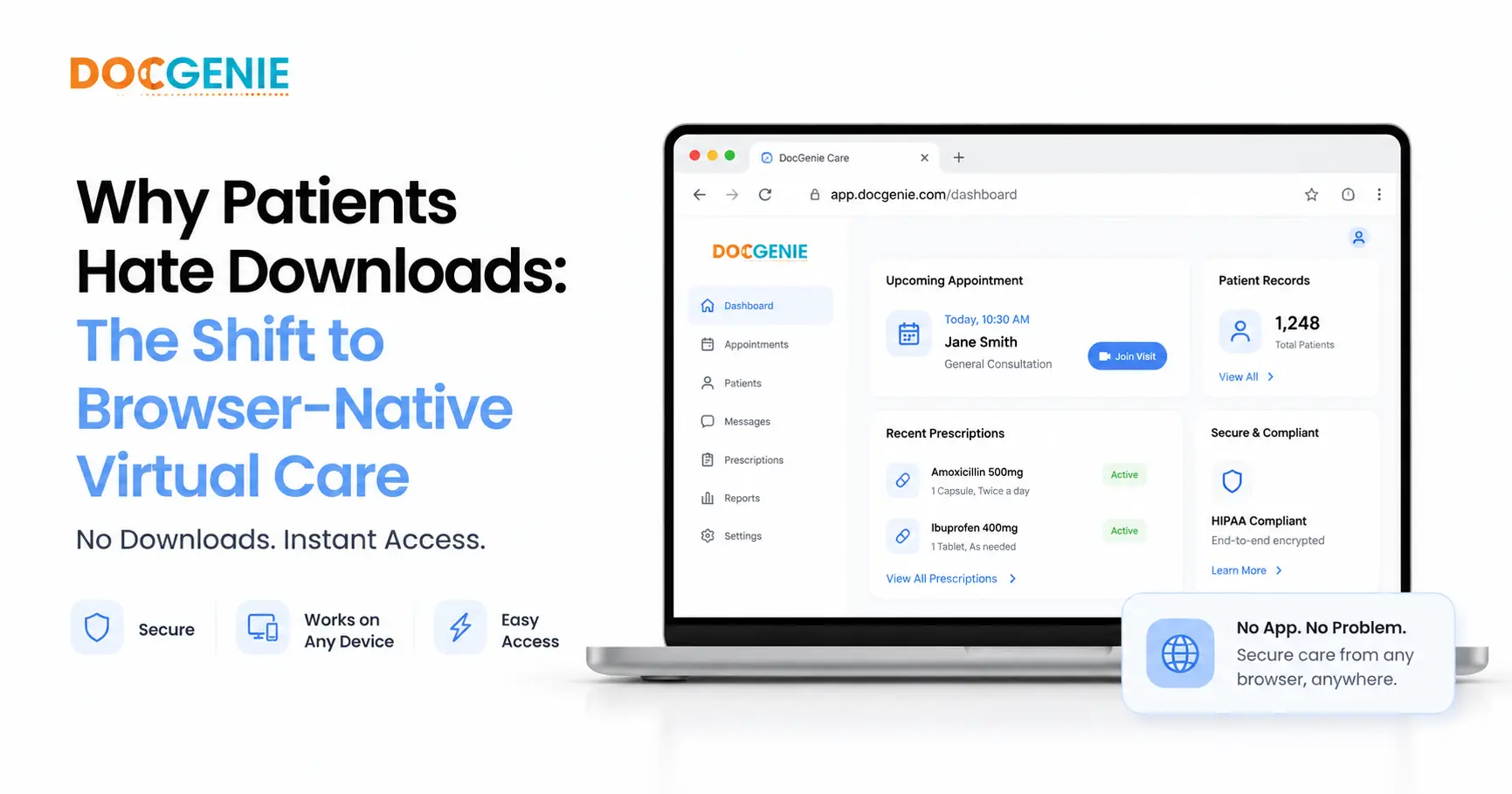
Browser-Native Virtual Care: Why Patients Hate Downloads

Here's How You Can Effectively Train Your Clinic's Staff to Deliver High Quality Virtual Care

How to Choose the Right Patient Management System for Your Virtual Care Platform?
Ready to enhance your telehealth services?
Discover how DocGenie Global can help you deliver superior virtual care experiences to your patients.