How to Launch a White Label Telemedicine Platform: A Step-by-Step Guide for US Healthcare Providers

Founder & Medical Director, DocGenie Global · MD (Family Medicine) · USC California · 30+ years of experience
Table of Contents
Introduction
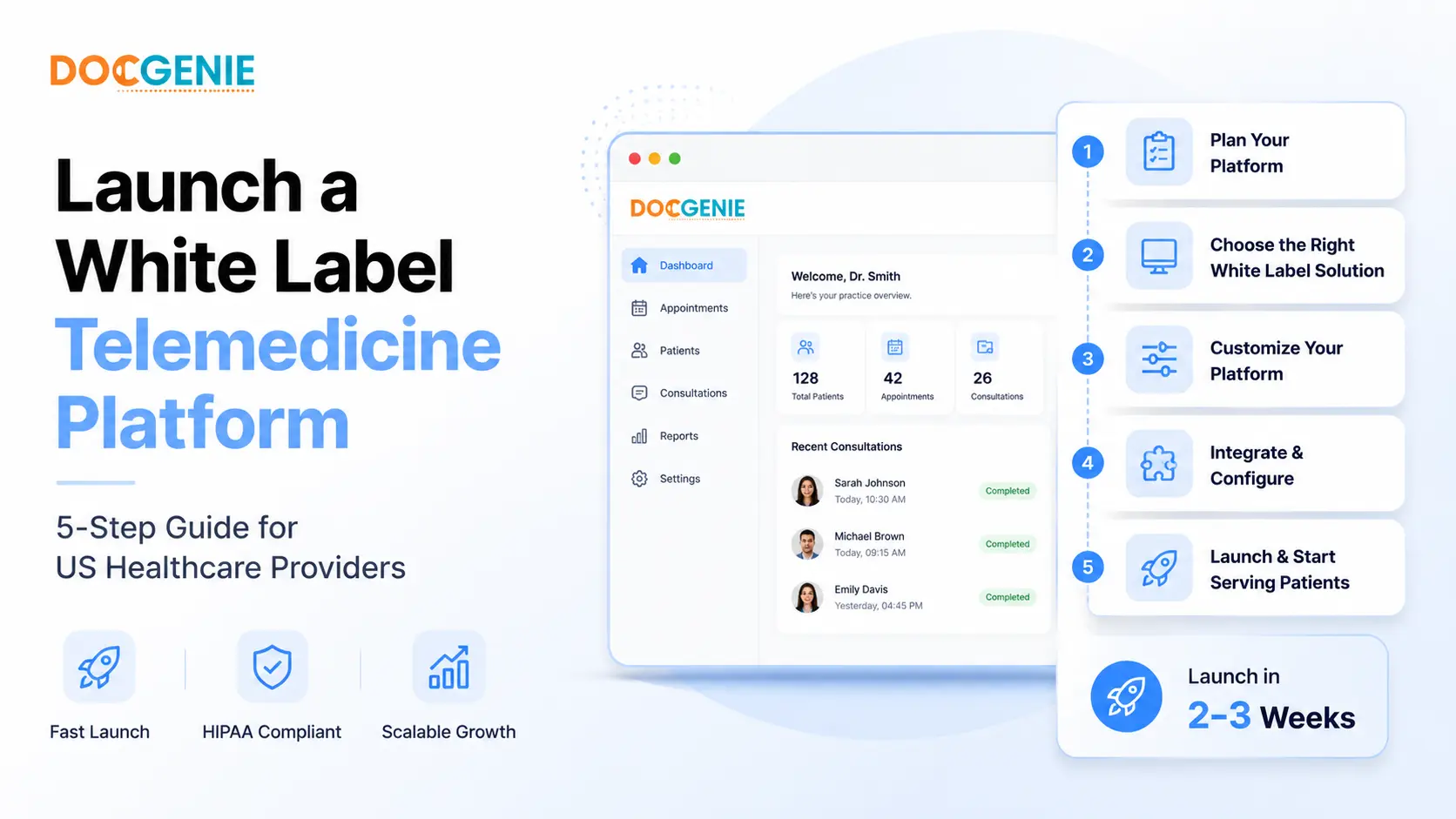
Launching a branded telemedicine platform with a white label solution follows a structured six-step process: define your virtual care model, select a vendor, configure your branding, set up integrations, train staff, and go live. The providers who move fastest through this process are those who invest in step one before evaluating any technology. Here is how the full process works in practice.
Step 1: Define Your Virtual Care Model
Before evaluating any white label telemedicine platform for the US market, be clear on what virtual care means for your organisation. The answers to these questions determine your platform configuration requirements and which integrations you need from day one:
Organisations that skip this step spend time evaluating platforms against unclear requirements and often go live with a configuration that does not fit their clinical workflow.
Step 2: Choose a White Label Telemedicine Vendor
Evaluate vendors against criteria that matter for US healthcare deployment — not just feature lists:
Review platform pricing early in vendor evaluation to ensure the model aligns with your organisation's size and budget.
Step 3: Branding and Platform Configuration
Once you select a vendor, the configuration phase covers:
This phase typically takes one to three weeks for a standard deployment, longer if multi-specialty or multi-location configuration is required.
Step 4: Integration Setup
Connect the platform to your existing clinical and operational systems:
Integration setup is the most variable phase in terms of time. A platform with no EHR integration may take days to configure. A deep bi-directional EHR integration with custom field mapping may take several weeks.
Step 5: Staff Training and Testing
Before going live, all clinical and administrative staff who will use the platform need to be trained and the full patient journey needs to be tested end-to-end:
Training and testing that surfaces issues before launch prevents the patient-facing problems that damage trust in a new virtual care service.
Step 6: Go Live and Monitor
Launch with a defined patient communication plan — email and SMS outreach informing existing patients that branded virtual care is now available. Include:
In the first two to four weeks post-launch, monitor closely: appointment completion rates, technical issue reports, patient and provider feedback, and any integration errors. Work with your vendor to address friction points quickly — early issues that are not resolved become adoption barriers.
How Long Does This Process Take?
Timeline depends on three variables: branding and configuration complexity, integration depth, and how quickly your organisation completes the internal steps (defining requirements, completing staff training, and testing).
Indicative ranges for US deployments:
Your vendor should give you a timeline scoped to your specific requirements at the start of the engagement — not a generic estimate that may not reflect your actual situation. Treat any vendor who cannot provide a scoped implementation timeline as a risk.
Conclusion
Launching a white label telemedicine platform is a structured process with a clear sequence of steps. The most common mistake US healthcare providers make is underestimating the importance of step one — defining the virtual care model — before evaluating any technology. Providers who do the planning work upfront move faster through implementation and go live with fewer surprises.
For a deeper look at compliance obligations before launch, see our guide on HIPAA Compliance for Telemedicine Platforms. For pricing expectations, see White Label Telemedicine Platform Pricing. And to see the platform built for this market, visit our white label telemedicine platform for US healthcare providers.
Frequently Asked Questions
What are the first steps to launching a white-label telemedicine platform?
The first steps are defining your clinical and operational requirements, confirming your compliance obligations (including HIPAA), evaluating vendors based on features and BAA availability, mapping your workflows, and planning your integration with existing EHR or billing systems before configuring and testing the platform.
What regulatory requirements must US healthcare providers meet before launching telemedicine?
US providers must comply with HIPAA (Privacy, Security, and Breach Notification Rules), obtain a signed BAA with their telemedicine vendor, follow applicable state telehealth practice laws, and ensure prescribing complies with DEA regulations and state licensure requirements. Regulatory obligations vary by state and specialty.
How long does it take to launch a white-label telemedicine platform in the US?
With a ready-made white-label platform, US providers can typically go live in a matter of weeks, depending on the complexity of EHR integrations, branding requirements, staff training, and compliance review. Custom-built platforms can take 12–18 months or longer.
What should I look for when choosing a white-label telemedicine vendor?
Evaluate vendors on HIPAA alignment and willingness to sign a BAA, integration capability with your existing EHR, scalability, security certifications, support model, go-live timeline, and the scope of features included out of the box versus those that require additional development.
How do I train clinical and admin staff for a new telemedicine platform?
Effective training is role-specific: clinical staff need workflow training covering patient intake, virtual consultation protocols, and documentation; admin staff need training on scheduling, payments, and reporting; IT staff need training on access controls and support escalation. Phased rollout with a pilot group helps identify gaps before full deployment.
Related Articles
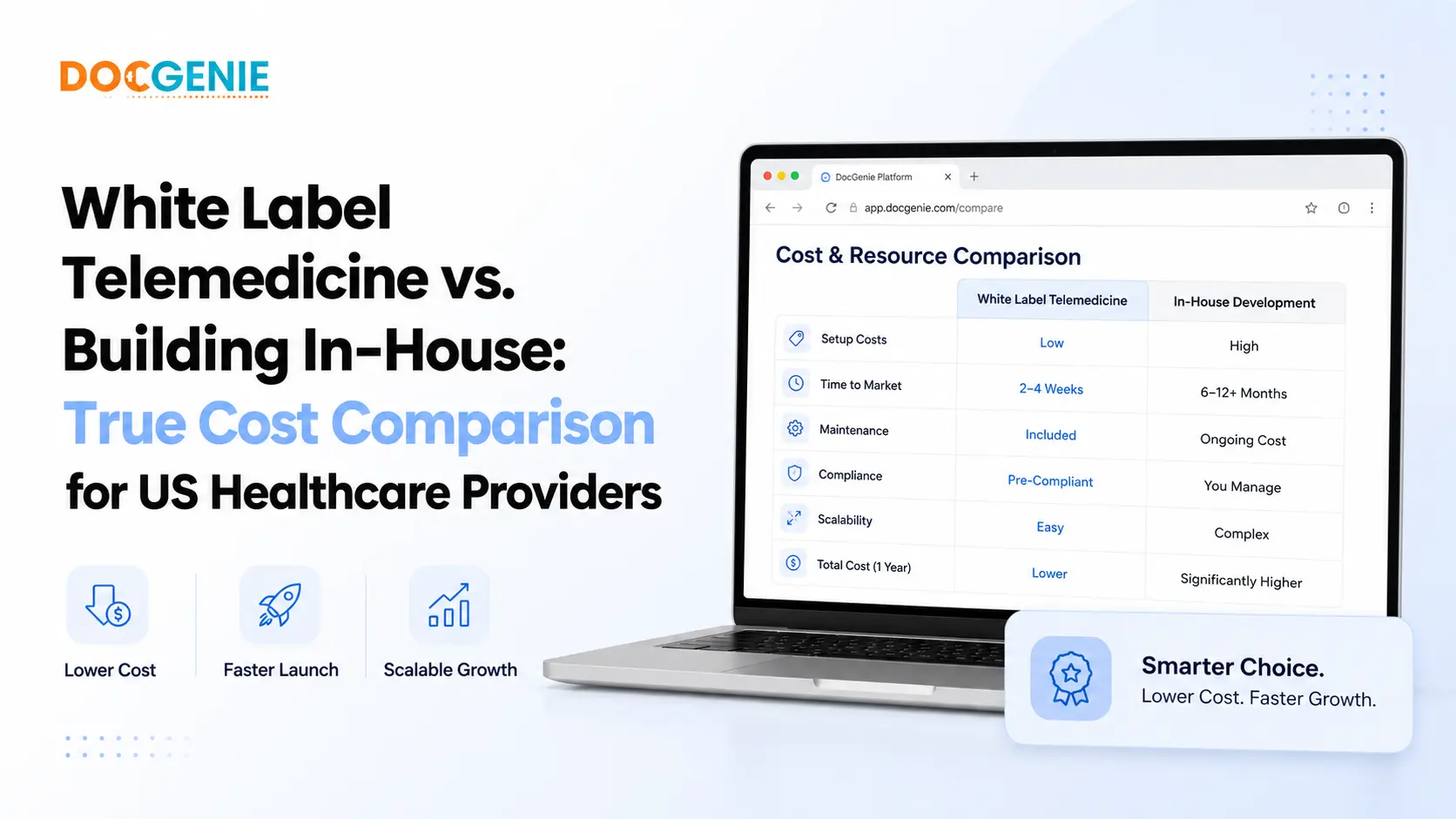
White Label Telemedicine vs. Building In-House: True Cost Comparison for US Healthcare Providers